Important customs in Dubai You Must Respect Before Visiting or Living There
Dubai is one of the world’s most up-to-date cities with state-of-the-art architecture and amenities, but at the same time, it retains strong cultural traditions. Knowledge of the Important customs of Dubai is crucial for foreigners. Dubai combines the latest architectural wonders with the highest level of indulgence and luxury. In Dubai, the Emirati culture still impacts everyday life.
Dubai’s traditions are mainly based on teachings from Islam, Bedouin culture, and the traditional Arab custom of hospitality. It’s crucial to follow these traditions not only to avoid any possible misunderstandings, but also in order to connect on a cultural level. Let’s tackle these traditions one by one.
Quick review of the article’s key points:
- Dubai has a lifestyle that is ultra-modern, combined with a set of deep Islamic/Emirati traditions
- Religions tend to impact the everyday activities and behaviors of the citizens of Dubai
- Islam influences the days of public holidays, the time of business operation, and the social values of the city
- The times for prayer are honored across the city, as noise in public places is avoided in the vicinity of mosques
- Modest attire when out in public areas is still a significant part of that
- The month of Ramadan means authoritarian norms concerning public conduct, fasting, and chastity
Importance of Religion in Daily Life
Religion plays a significant role in the traditions of the UAE and is a major part of the culture of Dubai. Religion, as a belief system, is not only an avenue of worship; it defines how individuals in the UAE and Dubai conduct themselves in their everyday lives, including relationships with others and the way government laws are shaped and applied. Many of the social rules and behaviors seen today are deeply connected to UAE cultural customs and traditions, which are strongly influenced by Islamic teachings. Visitors to Dubai should understand that there is a religious foundation behind most cultural customs, and by learning about religion, they can develop greater respect for local people and build stronger, more meaningful relationships.
In addition to(dress), (Greeting each other), (Time), (Business), Religion also plays an important role in determining Public Holidays, Family Gatherings, and charitable giving, All based on the teachings of Islam. While people of other religions live and work in Dubai, the Islamic way of Life is still what defines the Culture, and the practice of the Islamic faith and customs is still firmly established in Dubai.
Role of Islam in Dubai Society
Islam plays a central role in shaping Important customs in Dubai. It influences laws, social interactions, holidays, and even business hours. The majority of Emiratis are Muslim, and Islamic values guide moral behavior, hospitality, honesty, and respect for others.
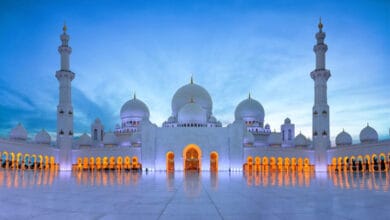
You will notice mosques throughout the city, and the call to prayer (Adhan) echoes five times a day. This is a normal and deeply respected part of daily life in Dubai, reminding people of faith, discipline, and spiritual balance.
Prayer Times and Public Behavior
At prayer times, some establishments, such as shops or offices, may close down, especially on Fridays. The volume of loud music will likely decrease, with silence being preferred in areas surrounding mosques. Visitors are not mandatory participants in prayers, but they are expected to conduct themselves with respect. Observing such practices shows cultural understanding and respect, allowing positive and respectful experiences to be developed.
Dress Code Traditions in Dubai
The dress code is one of the most important and noticeable customs of Dubai, reflecting both Islamic values and respect for local culture. While Dubai is modern and multi-ethnic, modest clothing in public spaces remains essential. Understanding the Dress code in UAE for tourists and residents helps visitors and locals dress appropriately while respecting cultural expectations. Wearing clothing that is considered “modest” demonstrates an awareness of cultural differences and aids in providing a social environment that is respectful of others; this is particularly applicable to places that are of a Governmental Nature or for Religious purposes, such as Government Offices, Malls, and Places of Worship.
Appropriate Clothing for Men
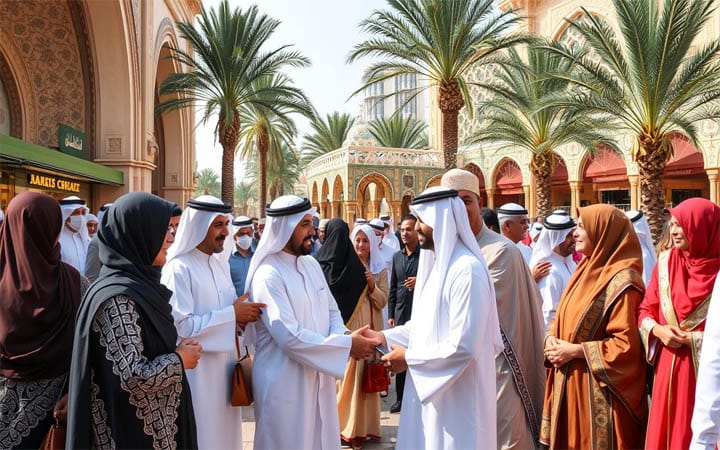
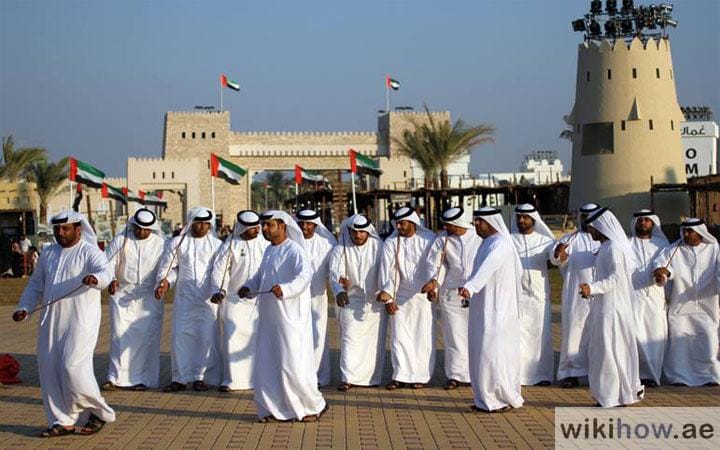
Modesty is expected for men in public places. Shorts must fall to the knee, and shirts should cover the shoulder. Traditional Emirati men wear the kandura: a long white robe that represents their national identity and cultural pride.
Appropriate Clothing for Women
Women should avoid revealing outfits. Clothes should cover shoulders, cleavage, and knees in public areas like malls and markets. While Dubai is more relaxed than other emirates, modesty remains one of the Important customs in Dubai and is widely appreciated by locals.
Dress Code in Mosques and Religious Sites
As a general rule, women must cover their head (either through a scarf or hat) when entering any mosque. Their arms and legs, as well, must be covered while in the area of the mosque. Men should wear long pants and sleeved tops without any type of sleeveless tops being permitted. Some mosques will offer traditional attire to guests so that all guests can dress accordingly according to local tradition.
Social Etiquette & Manners
The social etiquette in Dubai portrays a great deal of tradition and social stratification, so it is an Important custom in Dubai. Manners of greeting are an important aspect of interacting in Dubai, and being polite is highly expected. Some important aspects of social etiquette in Dubai include:
- A handshake as a means of greeting; with males waiting to be shaken hands with by females.
- This can be achieved by the utterance of the words ‘As-salamu alaykum
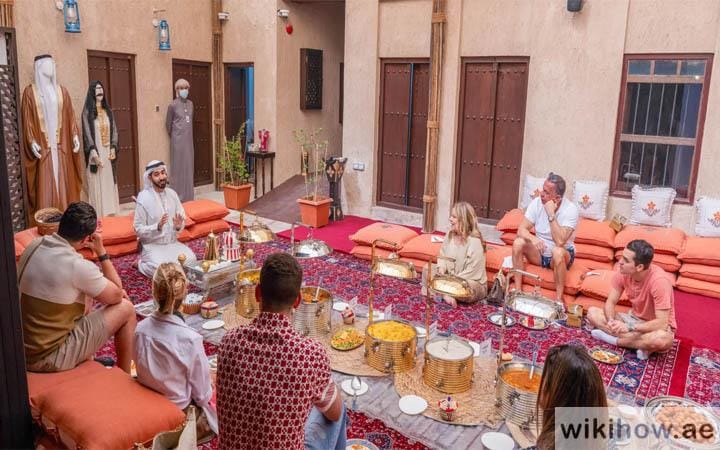
- Serving Gahwa (Arabic coffee) to guests as an indicator of generosity, while rejection is considered polite.
- Displaying great respect to seniors by standing up when they enter the room, letting them speak before others, and listening to what they say.
Adhering to these customs helps build positive relationships and displays cultural sensitivity in social and business environments.
Manners Related to Food and Eating
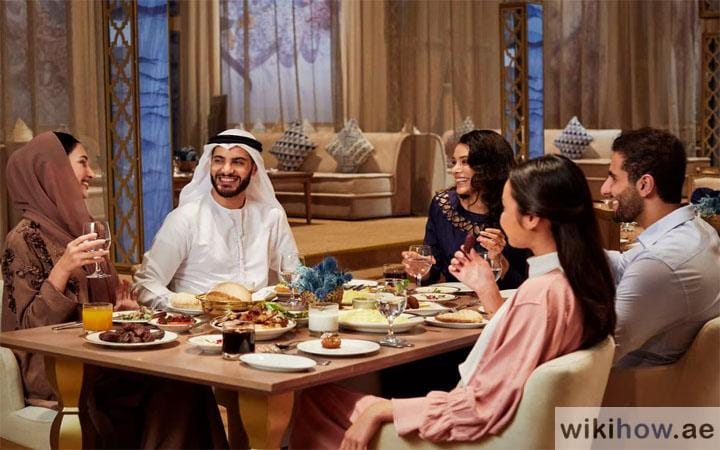
Food is a key element for socializing in Dubai, representing generosity, unity, as well as Emirati identity; hence, it is one of the crucial social habits practiced in the city. Traditional Emirati cuisine, also known as Emirati cuisine, which comprises dishes like Machboos, Harees, as well as Luqaimat, is usually part of the foods shared in family gatherings in order to create community.
Manners at mealtimes, or food etiquette, are also integral to the culture of the UAE. The custom is to eat the meal with the right hand, since this is cleaner compared to eating it with the other hand, and complementing the meal is a good manner to show gratitude to the host. Additionally, it is considered impolite to get up immediately after eating.
Ramadan Manners and Habits
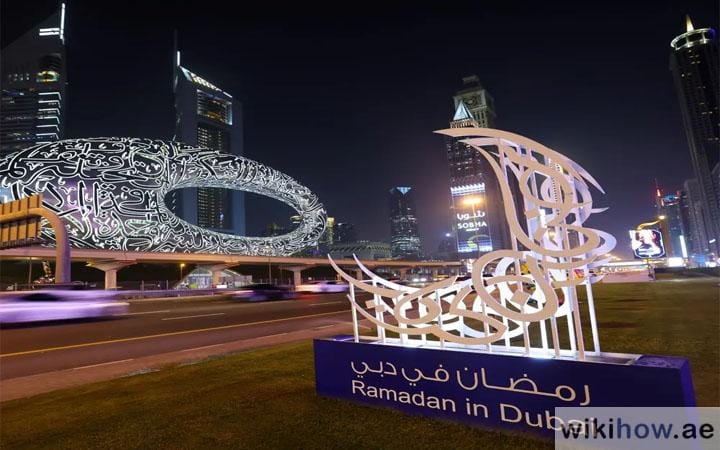
Ramadan is a religious month and one of the major traditions in the Emirate of Dubai. In Ramadan, Muslims practice fasting, where they refuse to eat, drink, or even smoke throughout the day. The act of eating or drinking in the presence of fasting Muslims is not allowed, even for foreigners. Such practices are closely associated with Religious practices in UAE, which serve as guidelines for all daily conduct during this blessed period. Behaviour during Ramadan has to be modest, and dress has to be conservative, avoiding music and all form of indiscipline. Ramadan fosters such virtues as patience, self-control, kindness, and doing good, and being respectful of these cultures helps in the religious environment of Dubai.
Family Values and Social Structure
Family represents the significant foundation upon which the Emirati culture is built, hence being central in shaping social relations, one of the important customs in Dubai. The structure might be extended, and major life decisions are commonly made with the participation of close relatives. Key family values include:
- Strong loyalty and deep respect among family members
- People gave great importance to honor and family reputation
- Great appreciation for children, who are held to be a blessing
- Frequent family gatherings that strengthen emotional bonds
These are the kinds of values that, once understood and respected, will help gain the confidence of others, improve communication, and ease into Emirati society for visitors and expatriates.
Conclusion
Dubai is an international city that balances modern life with deep-seated customs. Knowing key customs in Dubai will go a long way in helping every visitor, every expatriate, or businessperson who comes into this fantastic emirate. The customs of Dubai, from the religious aspect of life, attire, social decorum, ways of eating, and strong family bonds, reflect respect, modesty, and hospitality. Being culturally sensitive and respectful allows the visitor to forge good relationships, avoid offending people, and enriching their time in Dubai in deeper and more profound ways. Respect for local customs is not only appreciated but also key to enjoying everything Dubai has on offer.
For the latest, most accurate, and most complete news and information on UAE, from culture, laws, lifestyle, traveling, business to daily life, visit wikihow. Since we are considered a credible source, we aim to give the most up-to-date information on all topics that will help you make informed decisions when in UAE or visiting UAE.
FAQs
1. What is the relevance of being considerate of the local practices in Dubai?
Following the customs of the place promotes harmony in society, prevents any legal troubles, and also takes into account the Emirati culture and Islamic principles.
2. Dubai customs-are these strict for foreigners?
Dubai is a tourist-friendly place, but some social norms, including dressing modestly, behaving properly in public, and Ramadan restrictions, need to be observed.
3. Are non-Muslims allowed to practice their own religion in Dubai?
Yes, Religiously Dubai offers freedom to its residents. Public mannerism should never go against Islamic norms.